If you’ve been told your costochondritis should settle on its own, but it keeps affecting how you sit, sleep, breathe, or move, you’re not alone. Once serious issues have been ruled out, many people with costochondritis are told to wait and see (Dr Google?). Sometimes that advice is enough. Sometimes it is not.

Take Sally
Sally first noticed pain on the right side of her chest after a cough. Initially it came and went. Then it became more constant. Her doctor treated the cause of the cough, mentioned costochondritis, and told her to try anti-inflammatories(ibuprofen) and that it should go away by itself.
But six months later, it was still there. Sally had to stop ibuprofen as it upset her stomach.
Now it affects how she sleeps. If she rolls onto her left side, she feels it, so she avoids that position. Carrying a backpack makes walking more uncomfortable too. Bit by bit, Sally has adjusted the way she does things around the problem.
Now take Louis
Louis also had pain on the right side of his chest. He was not completely sure what triggered it. Maybe it was something in the gym. Maybe it was after finally slowing down (and binge watching a tv series for a couple days)following a hectic period at work. His doctor ruled out anything more serious and also mentioned costochondritis. He too was told to give it time.
But Louis had been through this kind of thing before. He once followed online advice for an ankle issue and let it drag on far too long,only to find out later that the original injury had healed and the ongoing issue was caused by compensation elsewhere in his body. He learned from that experience that getting useful guidance early can save a lot of time and frustration.
So, this time, he chose a different path.
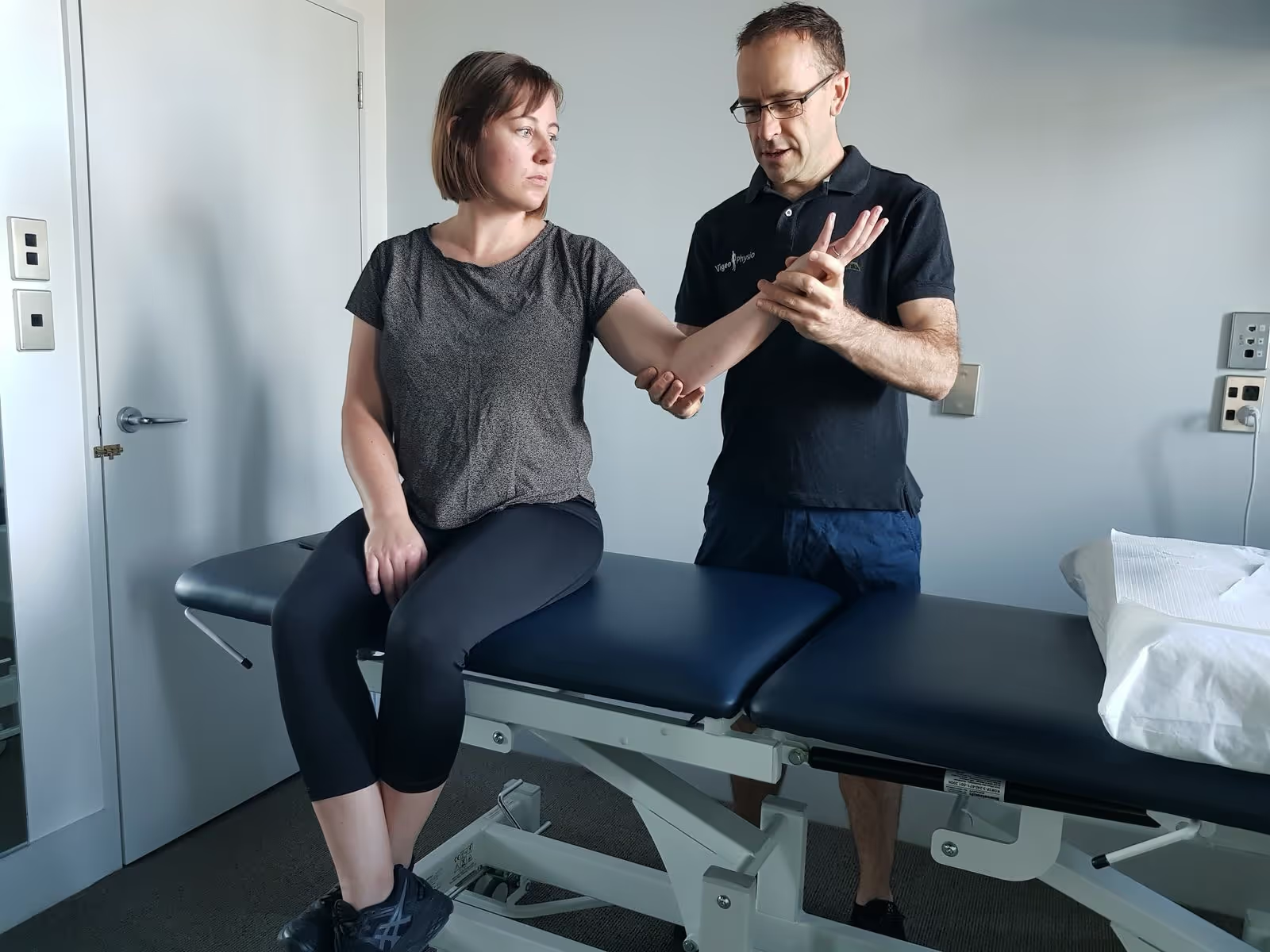
Instead of only waiting, he got help to understand what might still be keeping the area under strain. He tried the whole-body alignment approach with Vigeo. The movements and positions were gentle and simpler than he expected, but they made sense. He noticed some relief after the first session, and within a short space of time things had improved significantly.
Two people, same problem, different approach
These two stories show the difference between living with a problem (and the way it limits you) and looking properly at what the problem is (and over coming it).
Why a whole-body approach can help
That is often where a whole-body approach becomes useful.
The painful area matters, but it is not always the whole story. The alignment of your chest, rib cage, upper back, shoulders, neck, and the rest of the body can all affect how much strain continues to go through that area. Sometimes the issue is mainly local (where you feel your pain/problem). Sometimes it is due to compensation for something else that you get by with. The first win is understanding which of these is the case for you.
Instead of waiting, look at why it is happening
Instead of just waiting (and hoping), the better next step is to look at why(and what) is happening for you. That can include finding more comfortable positions, changing awkward postures or habits, easing obvious tightness, and helping your body work better as a whole.
The goal is fixing your problem (through clarity on what the problem is)
The aim is to save you time and hassle by addressing all parts to the problem. To work out what is happening that brings it back again and again so you can take corrective action quickly. Sometimes the issue is fairly simple. Sometimes it needs a more structured plan. Either way, getting clarity early can help you avoid months of pain, worrying, avoiding, or adapting unnecessarily.