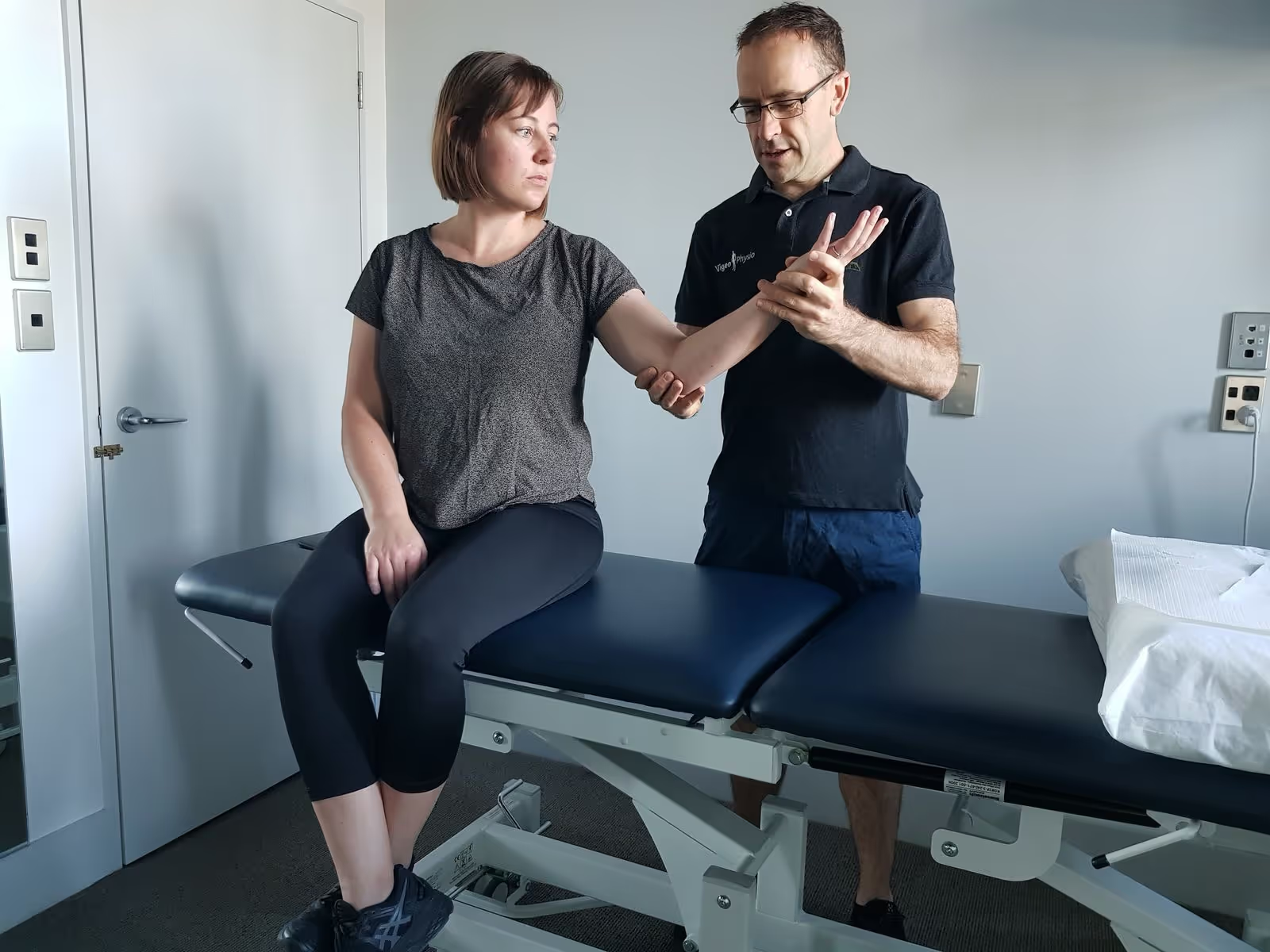
Struggling with sciatic-type pain?
Sciatic nerve pain can show up as a deep ache in your buttock, a pull in the hamstring,tingling down the leg - or even pain in the foot. It can be frustrating,draining, and hard to predict.
If you’ve had this for a while, you’ve probably tried a few things already and are wondering what will actually help in the long run.
On this page you’ll find:
· My own journey with sciatic nerveirritation
· A simple explanation of whatsciatica is (and isn’t)
· Why I look beyond just your lowerback
· How I assess and treat sciatic-type pain using physiotherapy and whole-body alignment
I provide consultations in Christchurch, or onlineif you’re away from Christchurch (NZ time zone).

My journey with sciatic nerve irritation
I’ve had my own long journey with an irritated sciatic nerve - and it took me a few years to figure out what actually helped.
When it first showed up, it felt like:
· A problem in the arch of my foot,and
· A vague, annoying feeling in my hamstring and buttock.
Like most people, I started with the obvious:
· I taped my foot where the main pain was. → No change.
· I tried physio from a workmate and others. → No change.
· I had an MRI, a nerve conduction study and sought opinions of specialists. àNo change.
Over the next few years, I went through what felt like a logical series of steps, hopingeach one would finally fix it.
No change.
As time went on, my symptoms worsened, the list of things I’d tried got longer - and so did my frustration.
Eventually, I stopped chasing quick fixes, took stock, and focussed on doing exactly what mybody needed. That’s when things started to shift.
By focussing on restoring whole-body function, my sciatic nerve became far less irritated. Life is much easier again.
That experience now shapes how I work with clients who have sciatic-type pain: we look at the whole body, not just one painful spot.
What is sciatic-type pain?
Sciatica is often felt as pain in the glute or buttock, sometimes extending down into theback of the upper thigh. Because the sciatic nerve supplies sensation andmuscle function to much of the leg, symptoms can sometimes reach further down -even into the foot or toes.
It usually affects just one side.
For general background information, you may also find sites like Health Navigator NZ helpful for typical explanations of sciatica.
Why you can be optimistic
The vast majority of musculoskeletal problems respond well to the right kind oftreatment and loading approach over time. Sciatic-type pain is extremely common, and there are many strategies that can help calm an irritated nerve and support better function.
A thorough plan will typically:
· Look at your specific situation, not just a textbook pattern
· Check for any worrying signs that need medical follow-up
· Focus on helping your body move and function better, rather than just chasing pain around
When your whole body works well, your nervous system often works better too - including your sciatic nerve.
I provide consultations in Christchurch, or online if you’re away from Christchurch (NZ time zone).
Morethan just “a disc problem”
Traditional explanations of sciatica often focus on lumbar disc prolapse or herniation (“disc bulges”) irritating a nerve root.
In the clinic, I often see a broader picture, including:
· Imbalances in the pelvic girdle muscles
· Changes in how the hips, pelvis and spine share load
· Whole-body patterns that place extra stress on the sciatic nerve
Add in things like prolonged sitting, previous injuries, and long-term movement habits, and the sciatic nerve can become very irritated - and take time to settle.
There are usually several key areas contributing to your symptoms. During an assessment, my goal is to identify which ones matter most for you.
How I assess sciatic-type pain
1. Ruling out important neurological issues
At Vigeo Physio, screening for neurological deficits is essential.
Serious neurological problems are less common, but they do need to be identified and managed appropriately. By checking things like strength, sensation and reflexes, we can:
· Pick up signs that may need medical or surgical opinion
· Reassure you when serious issues are unlikely
· Then focus on what in your body is actually driving your symptoms
2. Looking at posture and whole-body alignment
Your body has an optimal design. When your body is in better alignment and your muscles can do their jobs effectively, your sciatic nerve is less likely to be overloaded.
When there are dysfunctions or compensations, other areas of the body start working harder than they should - and the sciatic nerve can be affected.
A whole-body postural and movement assessment can show:
· Where your body isn’t working as well as it could
· How postural deviations and movement patterns may be influencing your sciatic nerve
· Why certain positions or activities tend to flare your symptoms
This helps your symptoms make sense - and gives us a clearer map for change.
Tailored treatment for your sciatic pain
Depending on what we find in your assessment, treatment may aim to:
· Reduce pressure and irritation onthe sciatic nerve where possible
· Improve muscle balance and control around the hips, pelvis and spine
· Restore more optimal whole-body function so everyday activities feel easier
This might include:
· Hands-on physiotherapy techniques
· Other supportive physiotherapy approaches
· Exercise-based postural and Whole-Body Alignment Therapy sequences
· Practical strategies for sitting, standing, lifting, driving and moving through your day
Your plan is tailored to your situation, goals and preferences - not just a generic sheet ofexercises.
Recovery time - as long as your body needs
Recovery time varies from person to person.
Some situations are like a classic car that needs a small but careful repair. Others are more like a full restoration project.
In many cases, we can:
· Find more comfortable positions early on
· Reduce the intensity or frequency of flare-ups
· Gradually build your confidence and capacity again
Deeper rehabilitation and more complete symptom change can take time. Every situation is individual, and no specific outcome can be guaranteed - the aim is to give your sciatic nerve and your whole body the best possible chance to improve.
Ready to take your next step?
If sciatic-type pain has been hanging around and you’re ready for a more thorough, whole-body look at it, you don’t have to keep guessing.
I provide consultations in Christchurch, or online if you’re away from Christchurch (NZ time zone). We’ll explore what’s driving your sciatic nerve pain (and any other relevant symptoms), screen for anything serious, and build a realistic plan aroundyour body and your life.