Postural changes can show up in many different ways.
Sometimes the area that looks “out of alignment” is only one part of a bigger biomechanical pattern elsewhere in your body.
Your head sits in front of your shoulders rather than directly above them.
Your shoulders tend to sit forward, often with the upper back appearing more rounded.
One shoulder sits noticeably higher or lower than the other.
The upper back appears more rounded, particularly when standing or sitting.
Your lower back has a pronounced curve and your pelvis may sit tipped forwards.
The natural curve in your lower back appears reduced.
The pelvis tips forwards, which can affect the position of the lower back, hips and legs.
One side of the pelvis appears higher, lower, rotated or shifted compared with the other.
You naturally stand with more weight through one leg or consistently lean to one side.
The position of your hips, knees and feet may influence how your whole-body loads when standing or moving.
The feet may point noticeably inward or outward, sometimes as part of a wider compensation pattern.
Differences in foot position can affect how forces travel through the legs, pelvis and spine.
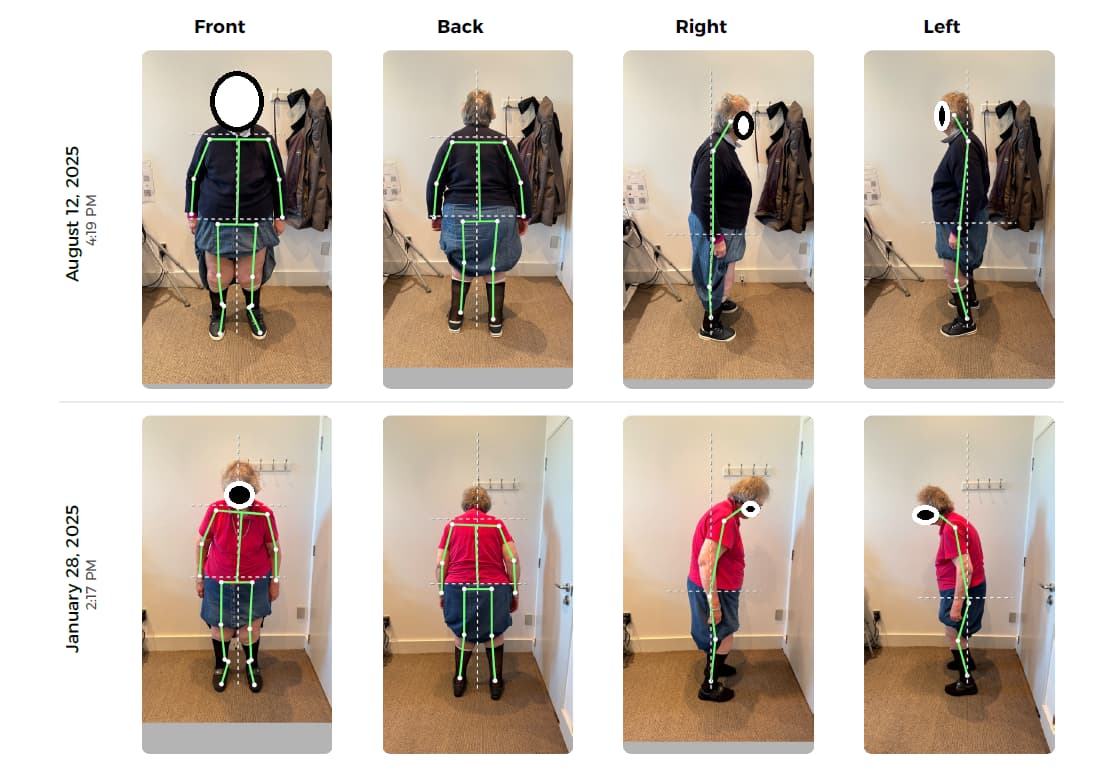
We assess your posture, biomechanics, movement and compensation patterns throughout your body to understand what is happening. Then we help you take action to gradually restore your posture.
So you can look AND feel great again.
For persistent or recurring problems, a broader approach may help.