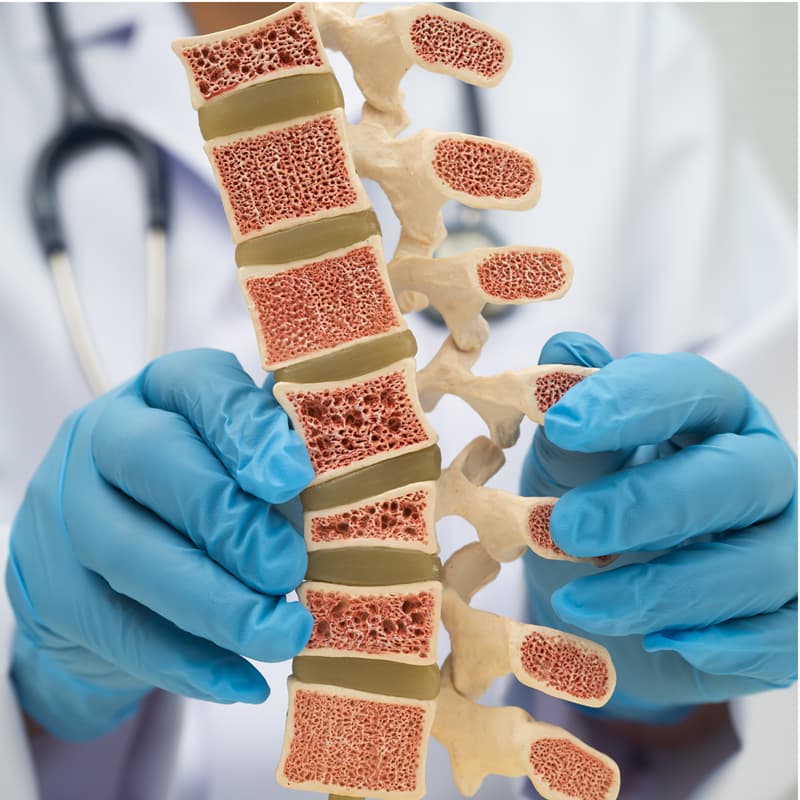
Osteoporosis causes a decrease in bone density, leading to increased fragility and a higher risk of fractures. Most commonly, osteoporosis can affect the spine, hip, wrist and shoulder (and upper arm). Whether you need rehabilitation or pain management following a fracture or exercise and fall prevention, physiotherapy helps you to get back on track.
Bones undergo a continuous remodelling process, where old bone tissue is broken down by cells called osteoclasts, and new bone is formed by osteoblasts. This cycle allows bones to adapt to stress, repair micro-damage, and maintain overall strength. Osteoporosis occurs when the balance between bone resorption and bone formation is disrupted, resulting in the loss of bone mass over time.
Osteoporosis often develops silently over many years; the lower bone density can then result in breaks from minor falls or even normal activities.
Fortunately, there is a wealth of information to help you understand what osteoporosis is, what effect is has on you and what you can do to maintain good bone health and reduce your risk of falls.
• Perform regular weight-bearing exercise
• Eat a balanced diet
• Limit alcohol intake
• Stop smoking
• Maintain a healthy weight
• Get enough sun exposure
• You break a bone or bones easily. Even from a minor incident (fall from standing or coughing or sneezing)
• Less height - you may notice that you are shorter than you were before.
• Posture: Stooping or hunching (dowagers hump, kyphosis or forward shoulders)
• Persistent pain in your back or neck
• Shortness of breath
There are many factors to consider when you have osteoporosis or osteopenia. Physiotherapy plays a crucial role in managing osteoporosis and improving contributing factors.
Treatment strategies we use include:
• rehabilitation if you have had a fracture
• exercise and fall prevention
• pain management (if you have had a fracture or have reduce mobility and stiffness)
• postural correction
• lifestyle improvement
Over the course of your programme, we aim to teach safe movement techniques for daily activities and exercise.
So, you can learn the right way to enhance your bone health and reduce your risk of falling.
https://osteoporosis.org.nz/individuals-families/

For persistent or recurring problems, a broader approach may help.